
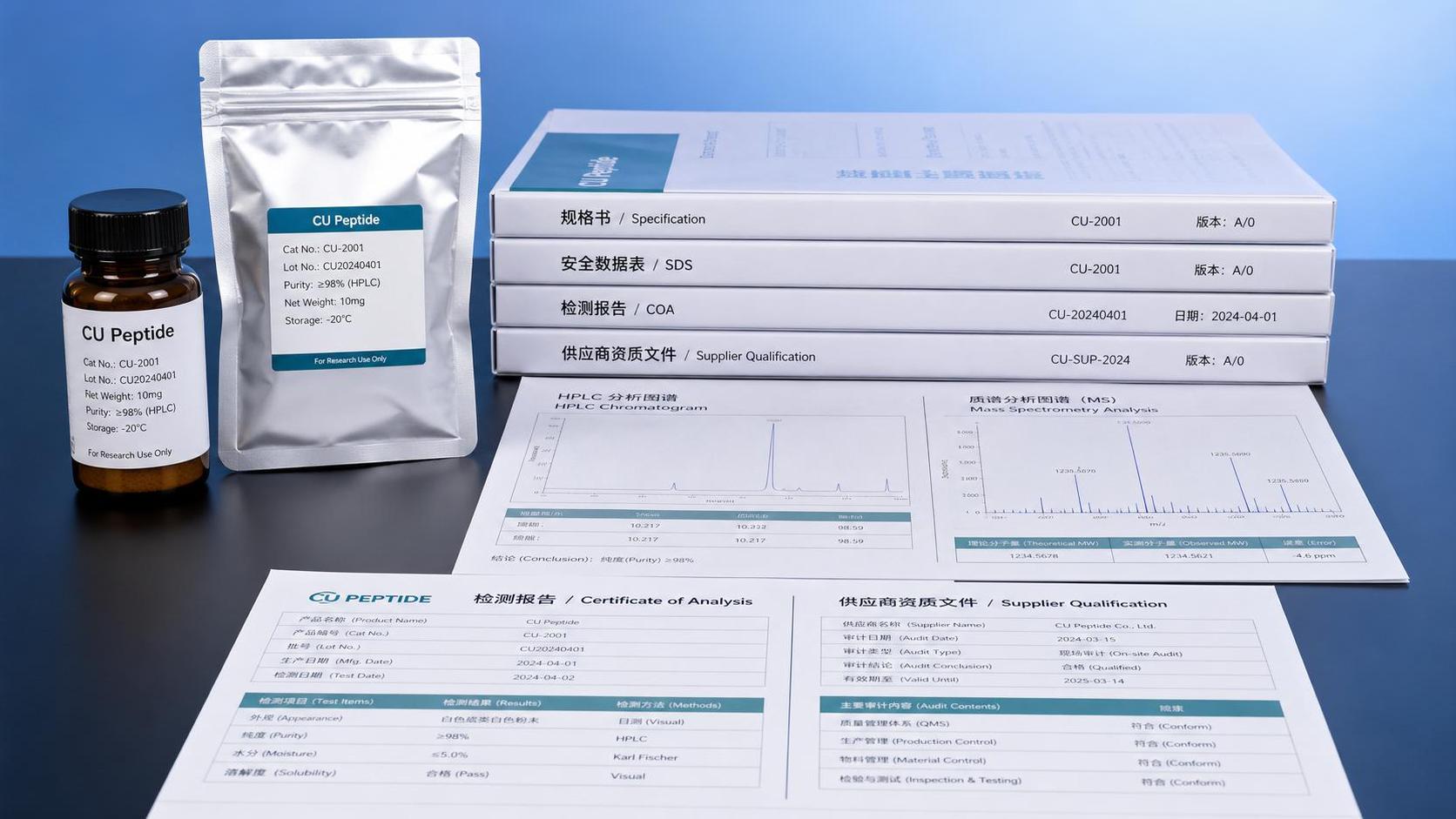
In the context of globalized procurement, peptide raw materials have become a major focus of audit for buyers in the biopharmaceutical, cosmetics, and health industries due to their high technical barriers and complex manufacturing processes. For overseas buyers, the inability to conduct frequent on-site inspections poses a significant challenge. Therefore, establishing a scientific, systematic verification framework based on "remote assessment + data verification" is key to evaluating the true production capacity of a peptide facility.
1. Reviewing the Brands and Scale of Core Processing Equipment
The hardware strength of a peptide facility is directly reflected in its workshop configurations. Global buyers can verify technical boundaries by reviewing the facility's certified equipment list.
◾ Synthesis Stage: Pay attention to whether they are equipped with fully automated peptide synthesizers, as well as the maximum reaction vessel volume per single batch. Automated equipment effectively reduces human error, ensuring the stable yield of long-chain or complex modified peptides.
◾ Purification and Lyophilization: High-purity peptides rely heavily on industrial-grade Preparative High-Performance Liquid Chromatography (Prep-HPLC) systems. Buyers should verify the quantity and specifications of the purification equipment, alongside the total surface area of the vacuum freeze-dryers, as this directly dictates the facility's actual weekly capacity and lead-time guarantees.
2. Evaluating Quality Control Systems and the Authenticity of Analytical Data
Production capacity does not simply mean "the ability to manufacture"; more importantly, it means "the ability to consistently yield high-quality products."
◾ Third-Party Audit Reports: Check whether the facility holds internationally recognized quality management certifications, such as ISO 9001, or whether its manufacturing practices comply with relevant industry standards (such as cosmetics GMPC or pharmaceutical-grade production environments).
◾ Raw Data Verification: Buyers can request past Certificates of Analysis (COA), HPLC purity chromatograms, and Mass Spectrometry (MS) molecular weight identification charts for similar sequences. By examining the baselines, integration data, and batch traceability of these charts, buyers can verify the rigor of the facility's QA/QC team.
3. Examining Tiered Capacities and Actual Fulfillment Cases
A facility with mature manufacturing capabilities should be able to support a buyer through the entire product lifecycle—from initial R&D to full commercialization.
◾ Capacity Escalation: Verify whether the facility possesses a seamless transitional capacity ranging from gram-level (R&D customization) and kilogram-level (pilot testing) to ton-level (large-volume commercial mass production).
◾ Anonymized Case Studies: By understanding the facility's fulfillment history with well-known global brands or research institutions, as well as their export experience and customs clearance assistance capabilities, buyers can comprehensively assess the supply chain's resilience against risks.
Related Posts
- ▶ How Do Global Buyers Verify the Production Capacity of a Peptide Facility?
- ▶ Why Do Researchers Prefer Cooperating Directly with Peptide Facilities?
- ▶ What Certifications Should a Peptide Manufacturer Possess?
- ▶ How Does a Reliable Peptide Facility Ensure Product Consistency?
- ▶ How Does a Professional Peptide Facility Manufacture Custom Peptides?
- ▶ Why Quality Control is Essential in a Peptide Manufacturing Facility ?