In cutting-edge research across biopharmaceuticals, materials science, and life sciences, peptides have become indispensable materials for experimentation and development due to their high specificity and biological activity. Historically, researchers often procured peptides through traders or third-party reagent distributors. However, with intensifying scientific competition and stricter requirements for experimental precision, an increasing number of researchers are choosing to establish direct partnerships with source peptide facilities. This shift is driven by deep scientific and supply chain logic.
1. Seamless Technical Communication and In-Depth Customization
Research-grade peptides are rarely standard off-the-shelf products; they frequently involve complex amino acid sequence designs, site-specific modifications (such as phosphorylation, isotope labeling, or cyclization), and specialized purity requirements. By working directly with a manufacturing facility, researchers can engage in "face-to-face" technical consultations with frontline application scientists or synthesis engineers. This flattened communication mechanism ensures that scientific intent is accurately conveyed, synthesis feasibility is rapidly evaluated, and process routes can be adjusted based on experimental feedback, greatly preventing the waste of valuable R&D time caused by miscommunications through intermediaries.
2. Full-Process Quality Traceability and Data Transparency
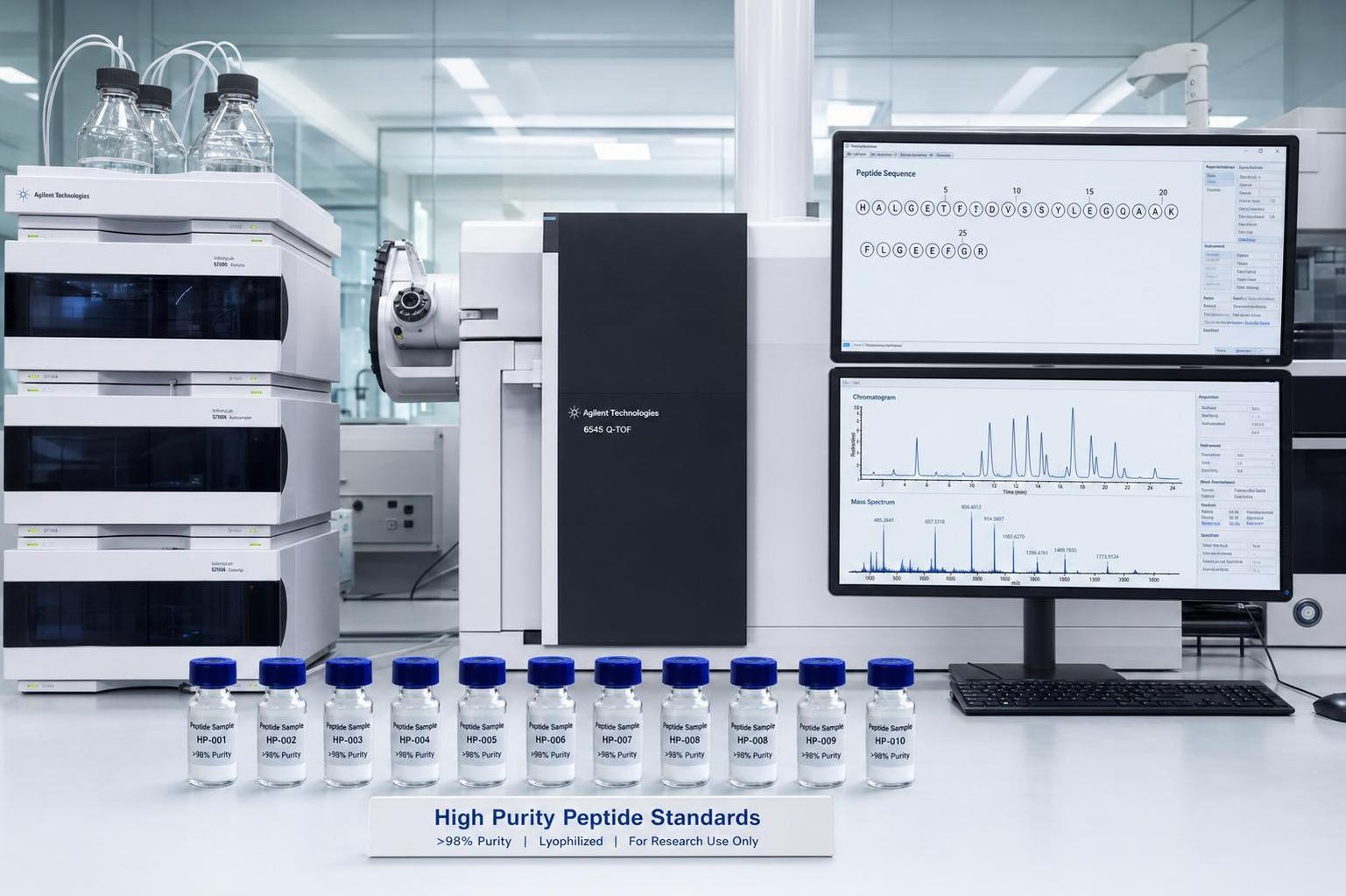
For scientific research, the reproducibility of experiments is of paramount importance. A peptide's purity, salt form (such as TFA salt or acetate salt), purification process, and impurity profile can all directly impact the outcomes of cellular or animal experiments. Cooperating directly with a peptide facility allows researchers to obtain firsthand, comprehensive Certificates of Analysis (COA), Mass Spectrometry (MS) charts, and raw High-Performance Liquid Chromatography (HPLC) data. Should anomalies arise during experimentation, researchers can directly access the facility's batch production records for troubleshooting—a level of full-process data traceability that third-party distributors can rarely provide.
3. Smooth Transition from R&D to Scale-Up Production
The ultimate goal of scientific research is application or the commercialization of achievements. Once a peptide molecule is proven effective at the laboratory stage, it will inevitably face scaling requirements—moving from bench-scale and pilot testing to kilogram-level commercial mass production. Partnering directly with a peptide facility that possesses scalable manufacturing capabilities means that a scalable process framework is locked in from the very beginning of the R&D phase. When the time comes to upgrade production capacity in the future, there is no need to source new suppliers or repeat tedious quality audits and process validations, thereby significantly shortening the transition cycle from "laboratory" to "market."
Related Posts
- ▶ How Do Global Buyers Verify the Production Capacity of a Peptide Facility?
- ▶ Why Do Researchers Prefer Cooperating Directly with Peptide Facilities?
- ▶ What Certifications Should a Peptide Manufacturer Possess?
- ▶ How Does a Reliable Peptide Facility Ensure Product Consistency?
- ▶ How Does a Professional Peptide Facility Manufacture Custom Peptides?
- ▶ Why Quality Control is Essential in a Peptide Manufacturing Facility ?