
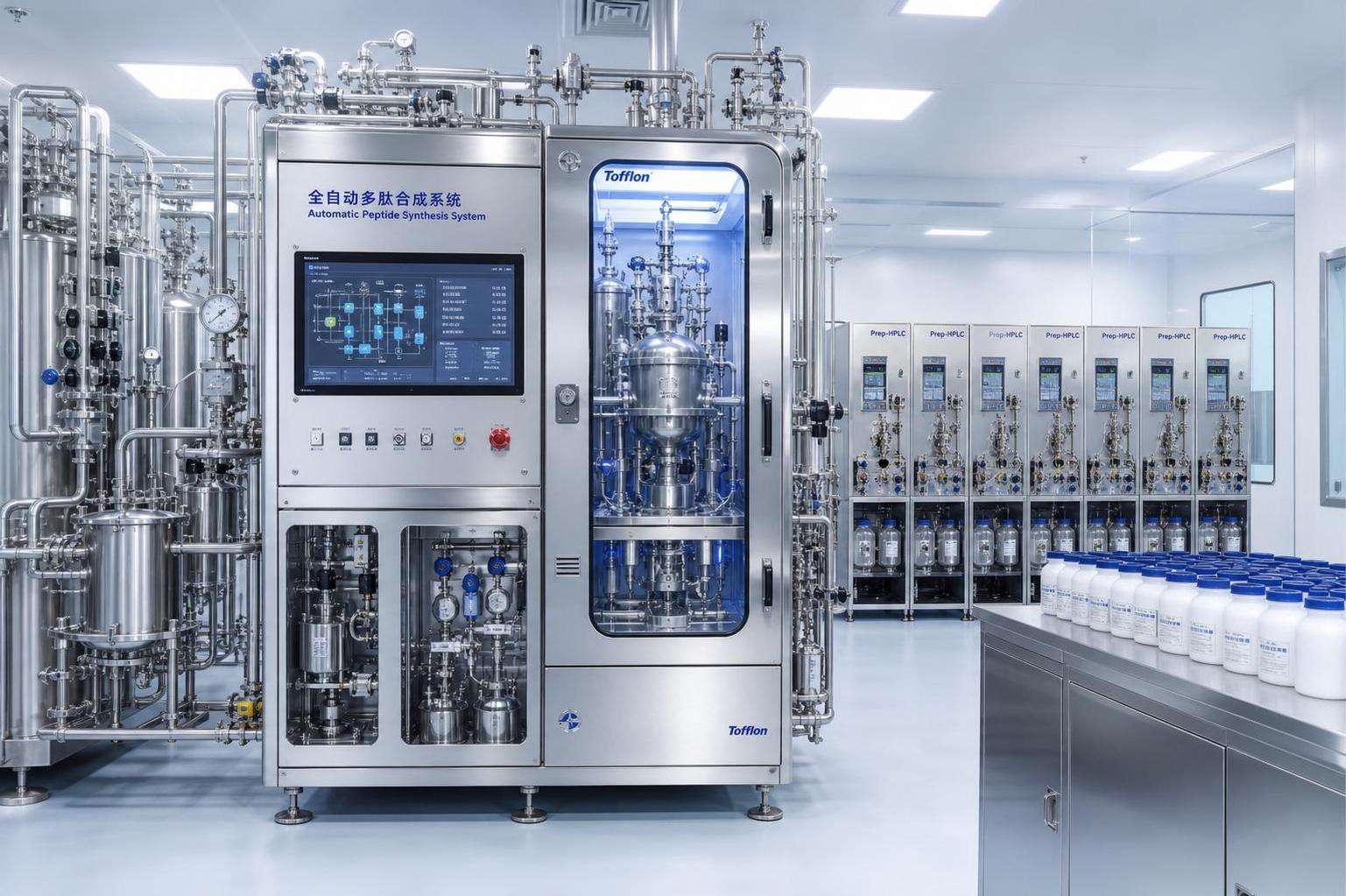
In the fields of biopharmaceuticals, novel drug R&D, and high-end cosmetic ingredients, the "batch-to-batch consistency" of peptide raw materials is a critical metric for evaluating a supplier's core capabilities. Because peptide molecules feature complex structures and multi-step synthesis pathways, any minor process fluctuation can result in variations in purity, solubility, or activity across different batches. Consequently, a reliable peptide facility builds a stringent consistency assurance system driven by full-process standardized management and technical monitoring.
1. Strict Source Control and Material Standardization
Product consistency begins with the stability of raw materials. A reliable facility establishes rigorous qualification and testing standards for all incoming amino acids, resins, coupling reagents, and organic solvents.
◾ Supplier Evaluation: Core raw materials are sourced exclusively from qualified suppliers who have undergone long-term auditing and demonstrate stable quality, strictly avoiding arbitrary vendor changes.
◾ Inbound Inspection: Before any batch of raw materials is moved into inventory, the quality control department conducts re-tests on key parameters such as purity, moisture content, and optical rotation, ensuring "zero variance" at the production source.
2. Automated Production and Digitally Locked Processes
Manual operations represent the largest variable introducing batch-to-batch errors. Modern peptide facilities mitigate this by utilizing high levels of automation to lock in manufacturing processes.
◾ High-Precision Automated Synthesis: Programmable peptide synthesis systems are deployed to strictly regulate feeding speeds, reaction temperatures, agitation rates, and washing durations. Through digital programming, validated process parameters are replicated exactly across every production batch.
◾ Rigorous In-Process Control (IPC): Real-time coupling efficiency and cleavage tests are conducted at each core node of synthesis, allowing immediate corrections if deviations are detected and preventing any latent issues from advancing to the next stage.
3. Standardized Purification and Fine Post-Processing
The purification and drying phases are decisive in shaping the final product's physical and chemical properties.
◾ Fixed Purification Methods: By using preparative High-Performance Liquid Chromatography (Prep-HPLC) columns of identical specifications, fixed mobile phase formulas, and standardized fraction-collection strategies, the facility ensures the target fractions captured across batches remain highly consistent in purity.
◾ Bulk Blending for Homogeneity: For large-volume orders, the facility executes strict bulk blending processes either before or after lyophilization (freeze-drying), bringing the entire production lot to a completely homogenous state.
Ultimately, supported by a comprehensive Standard Operating Procedure (SOP) data traceability system and thorough finished-product testing (supplying a consistent COA report), the facility guarantees that every batch of peptides leaving the plant shares identical quality attributes. This rigorous attention to every operational detail provides the foundational reliability that brand owners and scientific research institutions require for long-term, stable development.
Related Posts
- ▶ How Do Global Buyers Verify the Production Capacity of a Peptide Facility?
- ▶ Why Do Researchers Prefer Cooperating Directly with Peptide Facilities?
- ▶ What Certifications Should a Peptide Manufacturer Possess?
- ▶ How Does a Reliable Peptide Facility Ensure Product Consistency?
- ▶ How Does a Professional Peptide Facility Manufacture Custom Peptides?
- ▶ Why Quality Control is Essential in a Peptide Manufacturing Facility ?