
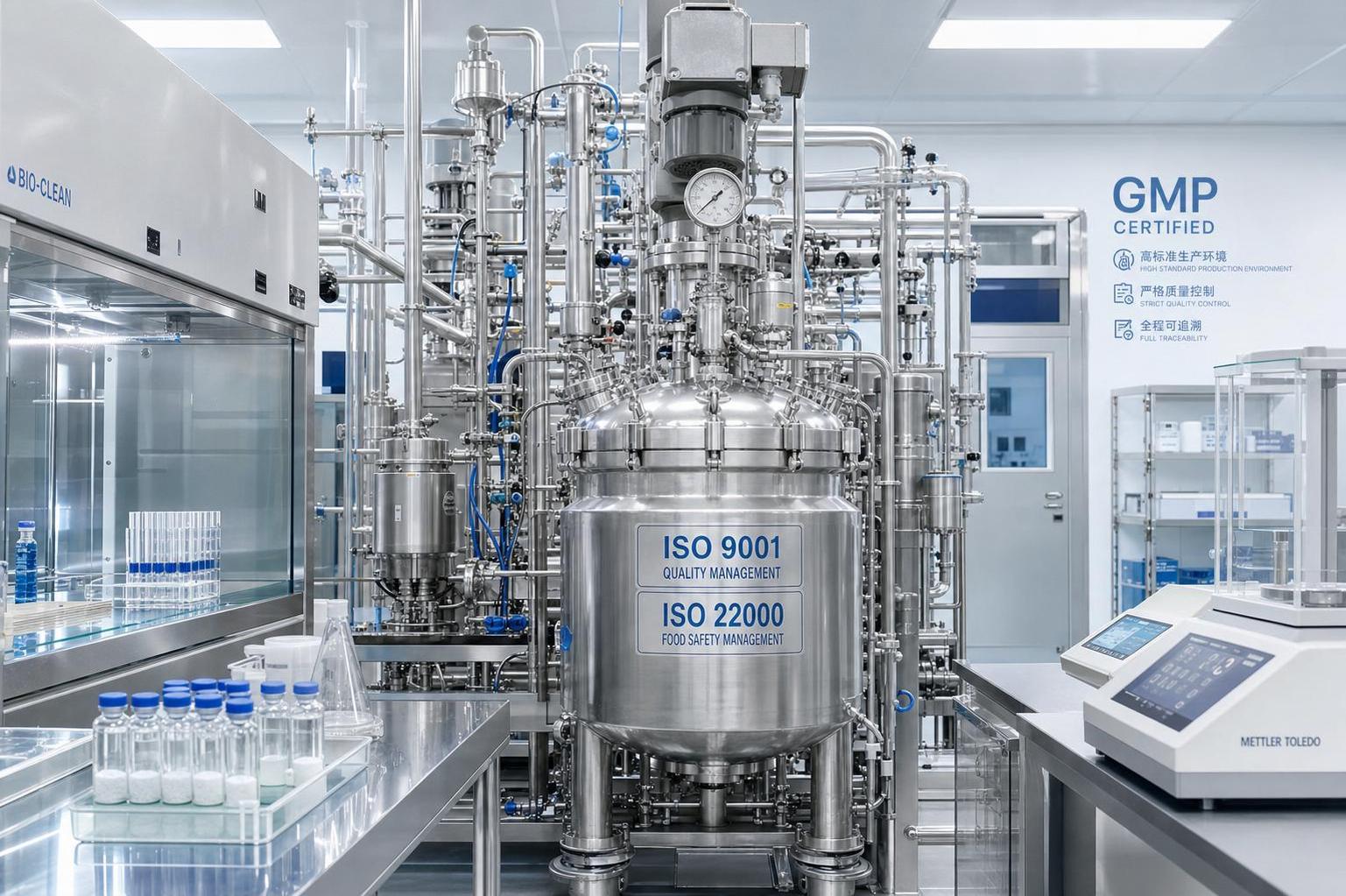
In the biopharmaceutical, cosmetics, and nutritional health industries, peptide raw materials serve as core ingredients. Their safety and compliance directly impact the market access and brand reputation of end products. Consequently, when selecting or evaluating a peptide manufacturer, the international and domestic authoritative certifications they hold serve as an important benchmark for measuring their production management, quality control, and supply chain stability. A professional peptide manufacturer typically needs to possess the following core categories of certifications:
1. Quality and Safety Management System Certifications
These systems form the cornerstone of commercial partnerships, ensuring that production workflows remain standardized and fully traceable.
◾ ISO 9001 Quality Management System Certification: This demonstrates that the manufacturer has the capability to consistently provide products that meet client requirements as well as applicable statutory and regulatory frameworks, signaling a systematized management process.
◾ ISO 22000 / HACCP Certifications: If the peptide raw materials are intended for oral supplements or health food applications, these certifications ensure that the entire food safety chain—from raw material procurement to finished product transportation—is under rigorous control.
2. Industry-Specific Manufacturing Standards and Practices
The application fields of peptides dictate that they must fulfill higher-spec production environments and processing requirements.
◾ GMP (Good Manufacturing Practice) Compliance/Certification: For the production of pharmaceutical-grade or high-end cosmetic-grade peptides, the facility's cleanrooms, equipment validation, material workflows, and personnel operations must align with GMP standards. This is a rigorous industry norm required to ensure high purity, sterility, or low endotoxin levels.
◾ ISO 22716 / GMPC (Good Manufacturing Practices for Cosmetics): For peptide manufacturers dedicated specifically to the beauty and skincare sector, this certification indicates that their production environment and sanitary conditions fully meet internationally recognized skincare ingredient manufacturing standards.
3. International Market Access and Environmental Qualifications
As global trade deepens, entering specific regions or meeting sustainability demands also requires the backing of corresponding credentials.
◾ Environmental and Operational Safety Licenses: Peptide synthesis involves complex chemical processes. Manufacturers must hold valid environmental discharge permits and safety production standardization certifications issued by local authorities. This provides a strong guarantee that the supply chain will remain stable and free from regulatory shutdown risks.
◾ Specific Market Registrations (e.g., US FDA Registration, EU REACH Registration): These indicate that the manufacturer's product technical dossiers have been submitted to relevant international regulatory bodies, granting them the credentials required for compliant global distribution.
In conclusion, a comprehensive certification portfolio is not only a reflection of a peptide manufacturer's technical capabilities but also represents their long-term commitment to product quality, social responsibility, and client interests.
Related Posts
- ▶ How Do Global Buyers Verify the Production Capacity of a Peptide Facility?
- ▶ Why Do Researchers Prefer Cooperating Directly with Peptide Facilities?
- ▶ What Certifications Should a Peptide Manufacturer Possess?
- ▶ How Does a Reliable Peptide Facility Ensure Product Consistency?
- ▶ How Does a Professional Peptide Facility Manufacture Custom Peptides?
- ▶ Why Quality Control is Essential in a Peptide Manufacturing Facility ?