
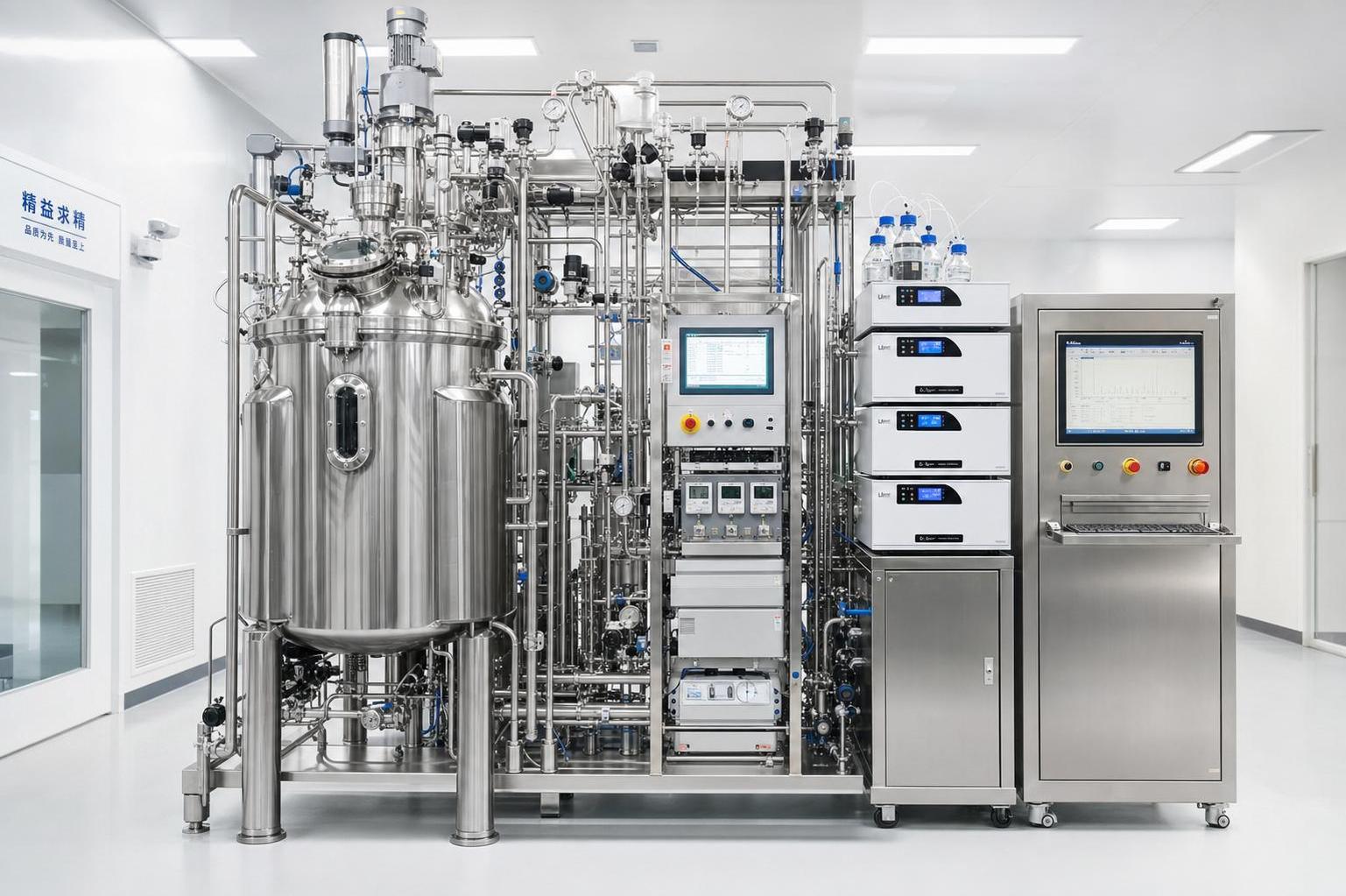
Driven by the rapid growth of the biopharmaceutical, cosmetics, and nutritional health industries, the quality of peptide raw materials directly determines the safety and market performance of end products. Selecting a compliant, stable, and professional peptide manufacturing partner (such as a CDMO or raw material supplier) is critical for brands and R&D institutions to ensure successful project implementation. When evaluating potential suppliers, enterprises should focus on the following core dimensions:
1. Regulatory Compliance and Quality Management Systems
Compliance is the cornerstone of commercial partnership. A reliable peptide manufacturer must possess a robust, traceable quality management system. Enterprises should prioritize facilities that have passed ISO 9001 (Quality Management Systems), ISO 22000 (Food Safety Management Systems), or those whose production processes comply with GMP (Good Manufacturing Practice) standards. Furthermore, peptide synthesis involves various chemical reagents and complex process controls; whether a manufacturer holds comprehensive environmental treatment qualifications and safety production licenses directly impacts their capability for long-term, stable supply under increasingly strict regulatory environments.
2. Technical Expertise and Purification Processes
The purity, activity, and structural stability of a peptide are the core metrics of its quality. When assessing a partner's technical expertise, consider whether they offer diversified process solutions—such as Solid-Phase Peptide Synthesis (SPPS), liquid-phase synthesis, or biological fermentation—and whether they can meet R&D requirements for long chains, cyclic peptides, or specific modifications. Concurrently, achieving high-purity peptides relies heavily on high-precision High-Performance Liquid Chromatography (HPLC) purification systems. An outstanding facility should be equipped with advanced analytical instruments like Mass Spectrometry (MS) to provide an authentic, detailed Certificate of Analysis (COA) for every batch, ensuring data transparency.
3. Production Capacity and Supply Chain Stability
Moving from laboratory R&D samples to commercial mass production requires a supplier with strong scaling capabilities. Enterprises need to evaluate whether the partner possesses a tiered production capacity ranging from milligram-level customization to kilogram- or even ton-level industrial manufacturing to match the needs of different product lifecycles. It is also important to understand their core raw material reserves and production scheduling to ensure the supply chain has sufficient elasticity and risk-resistance when market demand grows.
4. Technical Support and Project Communication Mechanisms
Peptide manufacturing involves high technical barriers. During process scale-up or formulation applications, challenges regarding solubility or stability often arise. Therefore, a qualified partner should be more than just a processing plant; they should have a professional technical support team capable of providing timely consultations and problem-solving solutions. In addition, an efficient project management mechanism and a transparent progress-feedback workflow can significantly reduce communication costs and shorten the product's time-to-market.
Related Posts
- ▶ How Do Global Buyers Verify the Production Capacity of a Peptide Facility?
- ▶ Why Do Researchers Prefer Cooperating Directly with Peptide Facilities?
- ▶ What Certifications Should a Peptide Manufacturer Possess?
- ▶ How Does a Reliable Peptide Facility Ensure Product Consistency?
- ▶ How Does a Professional Peptide Facility Manufacture Custom Peptides?
- ▶ Why Quality Control is Essential in a Peptide Manufacturing Facility ?